

The Relevance of Libraries in Contemporary Education
Walk into any high-performing school across the United States, and you’ll likely find one common feature: a vibrant, well-resourced library. Despite predictions that digital tools would render physical libraries obsolete, the opposite has proven true. Instead of diminishing, the role of libraries has evolved to meet the diverse needs of today’s students and educators.
The importance of libraries in education has grown significantly as traditional classrooms transform into multifaceted learning environments. Students today require not only internet access and digital databases but also quiet, focused spaces for study, research, and collaboration. Libraries provide this essential environment, fostering both concentration and creativity.
The Numbers Tell a Compelling Story
Research from the American Library Association underscores the substantial benefits libraries bring to academic performance. Consider these compelling findings:
- Students with access to certified librarians consistently score higher on standardized reading tests. With expert guidance on research skills and literacy, these librarians play a crucial role in shaping competent readers.
- Schools that feature dedicated study space design report improved concentration among students and lower dropout rates. These optimized environments, replete with comfortable seating and resource accessibility, motivate students to engage more meaningfully with their studies.
- Libraries are instrumental in reducing achievement gaps by providing equal access to library resources for students regardless of household income. This ensures that every student, no matter their background, has the tools necessary for academic success.
More Than Just Books
Modern educational institutions are reimagining what a library can offer. The role of libraries in schools has expanded to include technology labs, maker spaces equipped with 3D printers, and collaborative work zones designed for group projects. These innovations reflect a commitment to enhancing educational experiences.
This evolution highlights a deeper truth: the connection between educational institutions and libraries is foundational to student success, not merely optional infrastructure. Understanding the benefits of study spaces necessitates an appreciation of how carefully crafted environments impact learning outcomes and student engagement.
What exactly makes these library spaces so essential, and how are schools redesigning them to cater to tomorrow’s learners? The answers lie in the growing recognition that well-designed spaces can create inviting atmospheres for exploration, collaboration, and discovery, ultimately leading to higher rates of student achievement and satisfaction.
LEARN MORE: The Impact of Modern Library Spaces on Student Learning and Collaboration
# Designing Spaces That Shape How Students Learn
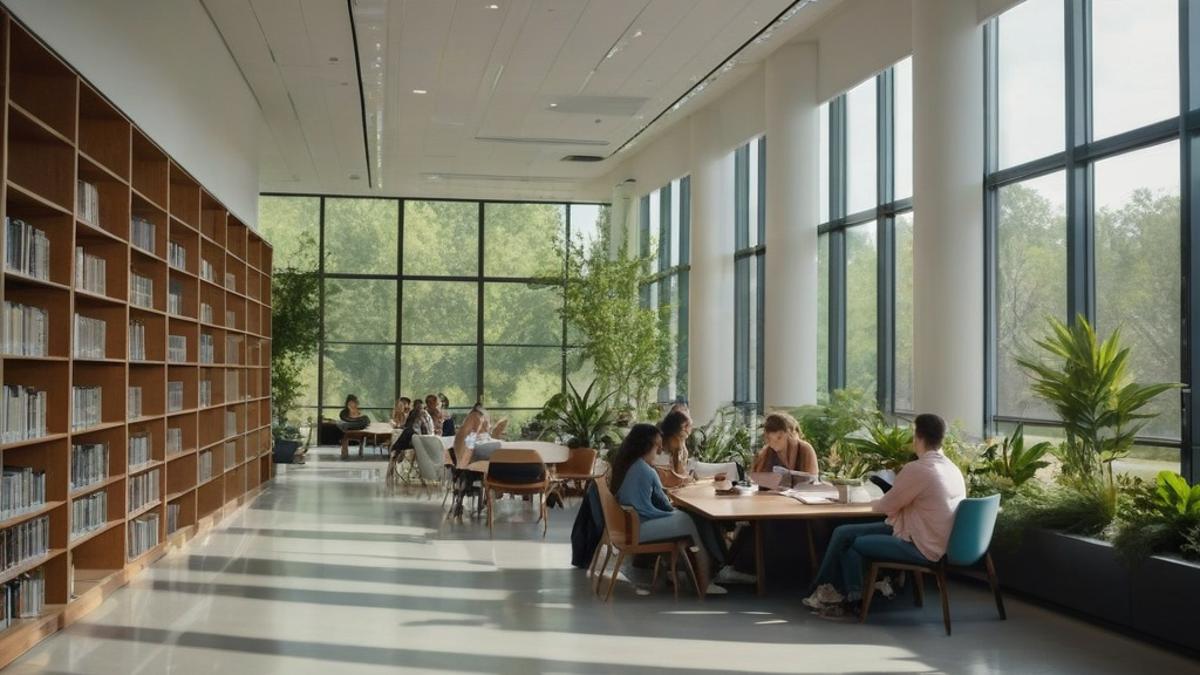
Step inside the library at a public high school in Austin, Texas, and you won’t find rows of silent bookshelves alone. Instead, you’ll encounter pods of students huddled around laptops, a dedicated quiet zone for test prep, and a makerspace buzzing with robotics kits. This transformation illustrates exactly why study space design in schools has become a priority for administrators nationwide.
Gone are the days when a library’s success was measured solely by its book count. Today, the role of libraries in schools centers on flexibility—creating zones that adapt to different learning styles, subjects, and group sizes throughout a single school day.
The Science Behind Smart Study Environments
Educational researchers have identified specific environmental factors that directly influence academic performance. Lighting, acoustics, and spatial organization aren’t just aesthetic choices; they’re pedagogical tools.
A study published by the Design Share Institute found that classrooms and libraries with natural lighting improved student test scores by up to 26 percent compared to spaces reliant on fluorescent lighting alone. This single detail demonstrates how deeply benefits of study spaces extend beyond mere convenience.
Consider these additional environmental factors schools are now prioritizing:
- Acoustic zoning that separates collaborative discussion areas from silent study sections, reducing distractions without sacrificing group work opportunities.
- Flexible furniture including modular tables and mobile whiteboards, allowing spaces to transform from lecture setups to project-based learning environments within minutes.
- Technology integration zones equipped with charging stations, high-speed internet, and digital displays that support research and multimedia presentations.
- Wellness corners featuring plants and comfortable seating, designed to reduce student stress during high-pressure exam periods.
Bridging the Digital and Physical Divide
Perhaps the most significant shift involves how library resources for students now blend digital and physical formats seamlessly. School districts in California and New York have reported that hybrid libraries—offering e-book access alongside traditional print collections—see checkout rates increase by nearly 40 percent among middle and high school students.
This dual approach matters because it meets students where they are. Some learners thrive with tactile books; others prefer scrolling through digital archives on tablets. Libraries that accommodate both preferences reinforce the broader importance of libraries in education as inclusive, adaptable spaces rather than rigid, one-size-fits-all environments.
The connection between thoughtful design and academic outcomes raises an important question: if physical space genuinely influences learning capacity, what happens when schools fail to invest in these environments?
| Category | Characteristics |
|---|---|
| Library Resources | Access to books, journals, and digital content. |
| Study Space Design | Comfort and accessibility enhance learning efficiency. |
| Skill Development | Workshops on research and information literacy. |
CHECK OUT: Designing Inclusive Academic Facilities: Accessibility and Support for Diverse Learning Needs
# The Ripple Effect of Underinvestment
When budget cuts hit school libraries, the consequences rarely stay contained to a single room. Data from the American Library Association reveals that schools eliminating certified librarian positions between 2015 and 2020 saw a corresponding drop in standardized reading scores across multiple grade levels. This pattern underscores just how deeply intertwined educational institutions and libraries truly are.
In rural districts especially, the library often functions as the only reliable access point for high-speed internet and updated reference materials. A student in a small town in Montana might depend entirely on school hours to complete research projects, since home broadband access remains inconsistent across many farming communities.
What Happens When Schools Get It Right
Success stories offer a compelling counter-narrative. Consider the Cherry Creek School District in Colorado, which renovated its library spaces to include collaborative pods, silent study rooms, and a dedicated media lab. Within two years, teachers reported a measurable increase in student-led research projects and improved information literacy skills among ninth graders.
Similarly, several charter schools in Chicago have adopted extended library hours, keeping doors open until 6 p.m. on weekdays. This simple adjustment gave students without reliable home study environments a consistent, quiet place to complete homework, demonstrating firsthand the practical benefits of study spaces that extend beyond regular class time.
Measuring Impact Through Real Numbers
Quantifiable outcomes make the case even stronger. Consider these findings from recent educational surveys:
- Schools with dedicated librarians report 21 percent higher graduation rates compared to schools without library staff, according to a multi-state study conducted by the National Center for Education Statistics.
- Students who use school libraries at least three times weekly show improved time-management skills, based on self-reported surveys collected across Texas public schools.
- Districts investing in updated library resources for students—including digital databases and STEM kits—saw increased enrollment in advanced coursework the following academic year.
These figures suggest something administrators can’t easily ignore: the importance of libraries in education isn’t theoretical anymore. It’s measurable, documented, and increasingly difficult to dismiss when budget committees convene each spring.
Thoughtful study space design in schools also influences behavior in subtler ways. Teachers at a middle school in Portland, Oregon, noticed fewer disciplinary referrals after introducing flexible seating arrangements in their library, suggesting that environment shapes conduct just as much as curriculum does.
# Rethinking What Libraries Can BecomeThe evidence gathered across districts from Colorado to Illinois points to a conclusion that’s hard to sidestep: the importance of libraries in education extends far beyond housing books. These spaces have quietly evolved into research hubs, technology access points, and behavioral anchors for students who might otherwise fall through the cracks.What stands out most is how interconnected these benefits really are. A single renovation, like the one in Cherry Creek, can simultaneously boost literacy, reduce disciplinary issues, and increase enrollment in advanced courses. That’s not coincidence. It reflects how the role of libraries in schools touches nearly every measurable outcome administrators care about.
Looking Beyond the Numbers
Statistics tell part of the story, but the human element matters just as much. A student in rural Montana relying on school Wi-Fi, or a Chicago teenager staying until 6 p.m. to finish homework in a quiet room, represents something data alone can’t capture: dependence on institutions to provide what home environments sometimes cannot.This raises a broader question for communities nationwide. Should study space design in schools be treated as a core infrastructure priority, similar to science labs or athletic facilities, rather than an easily trimmed budget line?
A Call for Continued Investment
The relationship between educational institutions and libraries isn’t static. It shifts with funding decisions, technology trends, and community needs. Districts that recognize this and invest accordingly in staffing, digital library resources for students, and flexible layouts tend to see returns that ripple far beyond the library door itself.For parents, educators, and policymakers alike, the takeaway seems clear. Ignoring these spaces carries consequences that surface in graduation rates and reading scores years later. Investing in them, meanwhile, appears to pay dividends that are only beginning to be fully understood.
Frequently Asked Questions
How do libraries enhance the learning experience for students?
Libraries provide access to a wealth of resources, including books, journals, and digital media, that enrich the curriculum and support diverse learning styles. Additionally, study spaces within libraries promote collaborative learning and offer a quiet environment for individual study, making them essential for academic success.
What role do libraries play in developing research skills among students?
Libraries are instrumental in teaching students how to locate and evaluate sources, conduct research efficiently, and utilize academic databases. These skills are critical not only for completing assignments but also for lifelong learning and professional development.
How can libraries support underprivileged students in educational institutions?
Libraries often serve as safe havens for underprivileged students by providing free access to educational materials and technology. Furthermore, they offer programs and resources tailored to help bridge the educational gap, ensuring all students have the tools necessary for academic achievement.
In what ways do libraries foster community engagement within educational institutions?
Libraries often host events, workshops, and outreach programs that encourage community involvement and foster a sense of belonging. By serving as a hub for collaboration between students, faculty, and local organizations, libraries enhance the overall educational experience and strengthen community ties.
What are the key benefits of having dedicated study spaces in libraries?
Dedicated study spaces in libraries provide students with environments tailored for concentration and productivity, minimizing distractions. These spaces often include group study rooms, individual carrels, and technology-rich areas, allowing students to choose the setting that best suits their learning preferences.