

A New Dimension for American Classrooms
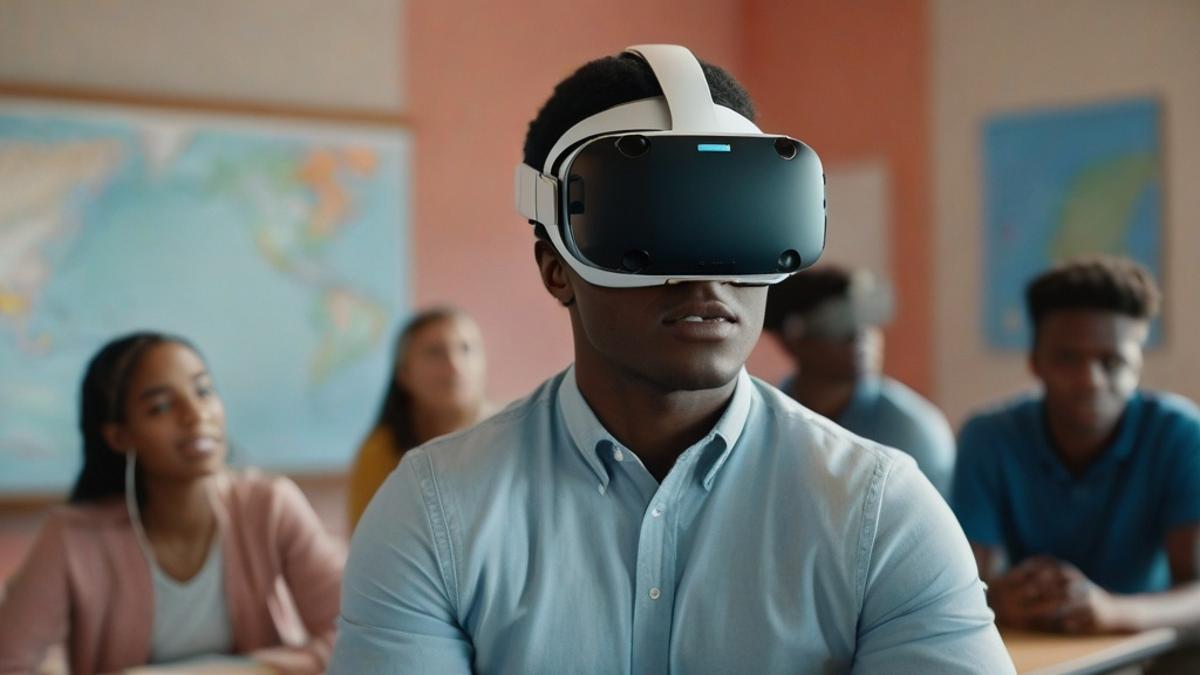
Picture a high school student in Ohio dissecting a virtual frog without a single scalpel, or a class in Texas walking through ancient Rome instead of reading about it. This is no longer science fiction—it’s the reality of Integrating Virtual Reality in Classroom settings across the United States. Schools are recognizing the potential of virtual reality (VR) to transform education, leveraging cutting-edge technology to create a more engaging and effective learning environment.
From rural districts to urban charter schools, educators are experimenting with headsets and immersive simulations. For instance, Virginia teachers have integrated VR experiences that allow students to explore the human body from a first-person perspective, greatly enhancing understanding of complex biological processes. The shift raises a compelling question: can this technology actually improve how students learn?
Why Schools Are Paying Attention
Recent data suggests that the momentum is real. According to a 2023 report by PwC, VR-trained students learned four times faster than in traditional classroom settings. This significant statistic highlights the effectiveness of VR for enhancing educational outcomes.
- Increased engagement through immersive, hands-on experiences: VR can transform traditional lessons into captivating adventures, like letting students experience the solar system firsthand or walk through historical sites.
- Improved retention compared to textbook-only learning: Research indicates that experiences in virtual environments create memorable associations, aiding in long-term recall.
- Safe simulations for science, history, and vocational training: Students can conduct complex experiments or practice surgical techniques without risk, promoting a greater understanding of safety in various fields.
- Accessibility to experiences otherwise out of reach, like space travel or deep-sea exploration: Virtual field trips provide opportunities for all students, including those from low-income backgrounds, to access learning experiences that would typically be prohibitively expensive or logistically complicated.
These outcomes explain why virtual reality classroom technologies are gaining traction among school boards and EdTech investors alike. Not only does this technology enhance learning, but it also prepares students for a future increasingly intertwined with digital environments.
What This Article Will Explore
This piece examines the practical side of adoption—not just the hype. We’ll look at tangible benefits of virtual reality in education, along with the hurdles schools face. Exciting real-world examples, such as a high school in California using VR to teach environmental science by simulating the impact of climate change on ecosystems, will be discussed.
- Real-world examples of VR curricula in U.S. schools, showcasing innovative uses and lessons learned.
- Strategies for using VR for student engagement, including best practices that maximize effectiveness.
- Cost, training, and infrastructure challenges that can hinder widespread VR adoption in schools.
- Predictions about the future of VR in education, informed by current trends and expert opinions.
Understanding these VR in teaching methods is essential for parents, educators, and administrators navigating this technological shift. As VR continues to advance, the classroom of tomorrow may already be taking shape today, prompting us to eagerly anticipate how these innovations will reshape the landscape of education in America.
LEARN MORE: Exploring the Role of Augmented Reality in Technological Integration in Educational Environments
# Inside the Classrooms Already Living in the Future
Inside the Classrooms Already Living in the Future
Walk into Mount Vernon High School in Alexandria, Virginia, and you might see a biology class huddled around headsets rather than textbooks. Students there strap on VR gear to journey through the human circulatory system, watching red blood cells pulse through arteries in real time. This is Integrating Virtual Reality in Classroom instruction in action, and it’s happening in more districts than most parents realize.
The trend isn’t confined to wealthy suburban schools. Districts in rural Kentucky and inner-city Chicago have piloted similar programs, often through grants or partnerships with EdTech companies eager to prove their platforms work in diverse settings. The common thread? Teachers report that students who once zoned out during lectures suddenly lean in when given a headset.
What Makes VR Different From Traditional Tools
Unlike a textbook diagram or even a YouTube video, VR places students inside the lesson. This spatial, first-person perspective triggers what researchers call “embodied learning”—when the body and senses participate in the learning process, not just the eyes and ears.
Stanford University’s Virtual Human Interaction Lab has studied this effect extensively, finding that immersive experiences often produce stronger emotional and cognitive engagement than passive video content. That distinction matters when schools are deciding where to invest limited technology budgets.
Several concrete applications are already reshaping how subjects get taught:
- Science labs: Students in Florida chemistry classes use VR to mix volatile compounds virtually, learning safety principles before ever touching real chemicals.
- History and social studies: A middle school in New York uses VR to place students inside the Selma-to-Montgomery march, deepening emotional understanding of civil rights history.
- Vocational training: Career-tech programs in Georgia let students practice welding techniques in simulated environments, reducing material waste and equipment risk.
- Special education: Some Ohio schools use VR to help students with autism practice social scenarios in low-stakes, repeatable simulations.
These examples illustrate the practical benefits of virtual reality in education beyond novelty. They point to a technology solving real instructional problems—engagement gaps, safety concerns, and access limitations—rather than simply adding flash to a lesson plan.
Still, adoption remains uneven. A school district’s zip code often determines whether students get access to this kind of immersive learning, raising questions this article will explore further: who gets left behind as virtual reality classroom technologies become more mainstream?
| Key Aspect | Description |
|---|---|
| Enhanced Learning Experiences | Integrating Virtual Reality in Classroom creates immersive learning environments, allowing students to explore complex concepts hands-on. |
| Student Engagement | Using VR for student engagement fosters active participation, essential for retention and understanding. |
| Accessibility and Inclusivity | VR technologies offer a way to adapt resources for diverse learning styles, ensuring all students can benefit from the benefits of virtual reality in education. |
| Future of Education | The future of VR in education lies in its ability to continually innovate teaching methods and expand the horizons of how subjects are taught. |
SEE ALSO: The Impact of Mobile Technology on Student Engagement and Collaboration
The Numbers Behind the Hype—and the Hurdles Standing in the Way
Enthusiasm for headsets in classrooms is easy to find. Hard data on outcomes is trickier, but it’s starting to accumulate. A 2023 PwC study tracking VR-trained learners found they completed courses up to four times faster than classroom-based peers and reported feeling more emotionally connected to the material. For educators weighing using VR for student engagement, numbers like these carry weight.
Other research paints a more nuanced picture. A meta-analysis published in the journal Computers & Education reviewed dozens of VR education studies and found consistent gains in motivation and short-term recall, but mixed results on long-term retention. In other words, VR seems to grab attention reliably; whether it deepens durable understanding still depends heavily on how teachers design the lesson around it.
The Price Tag Nobody Talks About Enough
Cost remains the biggest obstacle to virtual reality classroom technologies reaching every student. A single headset can run anywhere from $300 to $1,000, and that’s before factoring in software licenses, content libraries, and IT support to keep devices updated and sanitized between uses.
Multiply that by a classroom of thirty students, and budget-strapped districts face a math problem VR vendors rarely address upfront. Some schools have responded creatively:
- Rotating headset carts shared across multiple classrooms and grade levels instead of one-to-one device ownership.
- Grant partnerships with organizations like the ClassVR Foundation or state education technology funds.
- Community donations from local tech companies looking to support STEM initiatives.
- Phased rollouts starting with a single subject, like science or career-tech programs, before expanding.
Beyond cost, there’s the matter of teacher training. A headset without proper pedagogical framing is just an expensive toy. Districts that have seen success, including several in Texas and North Carolina, invested heavily in professional development, teaching instructors how to weave VR into existing VR in teaching methods rather than treating it as a standalone novelty day.
Physical side effects also deserve mention. Some students experience motion sickness or eye strain during extended VR sessions, prompting many schools to cap usage at fifteen to twenty minutes per session. Pediatric vision specialists generally recommend limiting immersive screen exposure for children under thirteen, a guideline that shapes how elementary schools approach adoption compared to high schools.
None of these hurdles have stalled momentum entirely. Market analysts at Grand View Research project the global VR-in-education sector will surpass $50 billion by 2030, suggesting that whatever challenges districts face now, investment isn’t slowing down. The bigger question is whether that growth translates into equitable access or simply widens the gap between well-funded schools and everyone else, a tension that shapes much of the debate around the future of VR in education.
Weighing the Classroom of Tomorrow Against the Budget of Today
Integrating Virtual Reality in Classroom settings isn’t a question of if anymore. It’s a question of how fast, how fairly, and how thoughtfully schools can pull it off.
The evidence gathered so far tells a split story. Students engage more, recall short-term material faster, and report stronger emotional connections to lessons delivered through headsets. Yet long-term retention data remains inconsistent, and the price of entry still locks out plenty of under-resourced districts. Both realities matter, and neither cancels the other out.
What’s clear is that the benefits of virtual reality in education depend less on the hardware itself and more on the humans deploying it. A $1,000 headset means little without a teacher trained to build a lesson around it. A rotating cart shared across grade levels can outperform a poorly integrated one-to-one program. Infrastructure alone doesn’t teach anyone anything.
Districts in Texas, North Carolina, and beyond have shown that phased, well-funded rollouts paired with genuine professional development produce better results than rushing to buy hardware for the sake of appearances. That’s a lesson worth repeating as more schools chase the next tech trend.
Looking ahead, the future of VR in education will likely hinge on three things: falling hardware costs, stronger long-term research, and equitable funding models that don’t leave rural or low-income schools behind. A $50 billion market projection means little if adoption stays concentrated in wealthy suburbs.
For now, the smartest path forward involves treating VR as one tool among many, not a replacement for solid teaching. Parents, educators, and school boards researching adoption should ask vendors hard questions about training support, data on retention, and total cost of ownership before signing any contract. The technology has promise. Whether that promise reaches every student remains an open, worthwhile question.
Frequently Asked Questions
What are the key benefits of integrating virtual reality in classroom settings?
Integrating virtual reality in classroom environments enhances student engagement and motivation by providing immersive learning experiences. It allows students to explore complex concepts in a more interactive manner, catering to diverse learning styles. Additionally, VR can create real-world scenarios for practical learning, making lessons more memorable.
How can teachers effectively implement virtual reality technology in their lessons?
Teachers can begin by identifying specific learning objectives that VR can enhance, such as science experiments or historical explorations. They should then select appropriate VR software and hardware, ensuring they are user-friendly and accessible. It’s also crucial to provide students with a guided experience and debrief afterward to reinforce what they’ve learned.
What challenges might schools face when integrating virtual reality in the classroom?
Schools may encounter several challenges, including budget constraints for purchasing VR equipment and software. Additionally, ensuring that both teachers and students have the necessary training to use the technology effectively can be a hurdle. Technical issues, such as software compatibility and internet connectivity, may also complicate integration efforts.
Are there specific subjects that benefit more from virtual reality integration in the classroom?
Subjects like science, history, and geography often benefit significantly from virtual reality integration because they can use immersive simulations to illustrate complex concepts. For instance, students can take virtual field trips to historical sites or explore the human body in detailed 3D. However, VR can be adapted across various subjects to enhance engagement and understanding.